Goldsmithing & Finishing
The Art of Jewelry Finishing
When looking at a finished piece of jewelry, it is easy to focus on the most noticeable elements: the design, the gold, the diamonds, and the gemstones. But there is another element that has an enormous influence on the way we perceive a piece of jewelry, even if we cannot always point to it precisely, the finish.
A perfectly smooth surface, clean lines, sharp edges where they are meant to be sharp, continuous curves, and a deep, even shine. None of these happen by themselves. They are the result of a long and precise process of working and refining the surface.
So What Exactly Is Finishing?
“Finishing” is a general term for all the work done to the surface of a piece of jewelry in order to bring it to its desired final appearance.
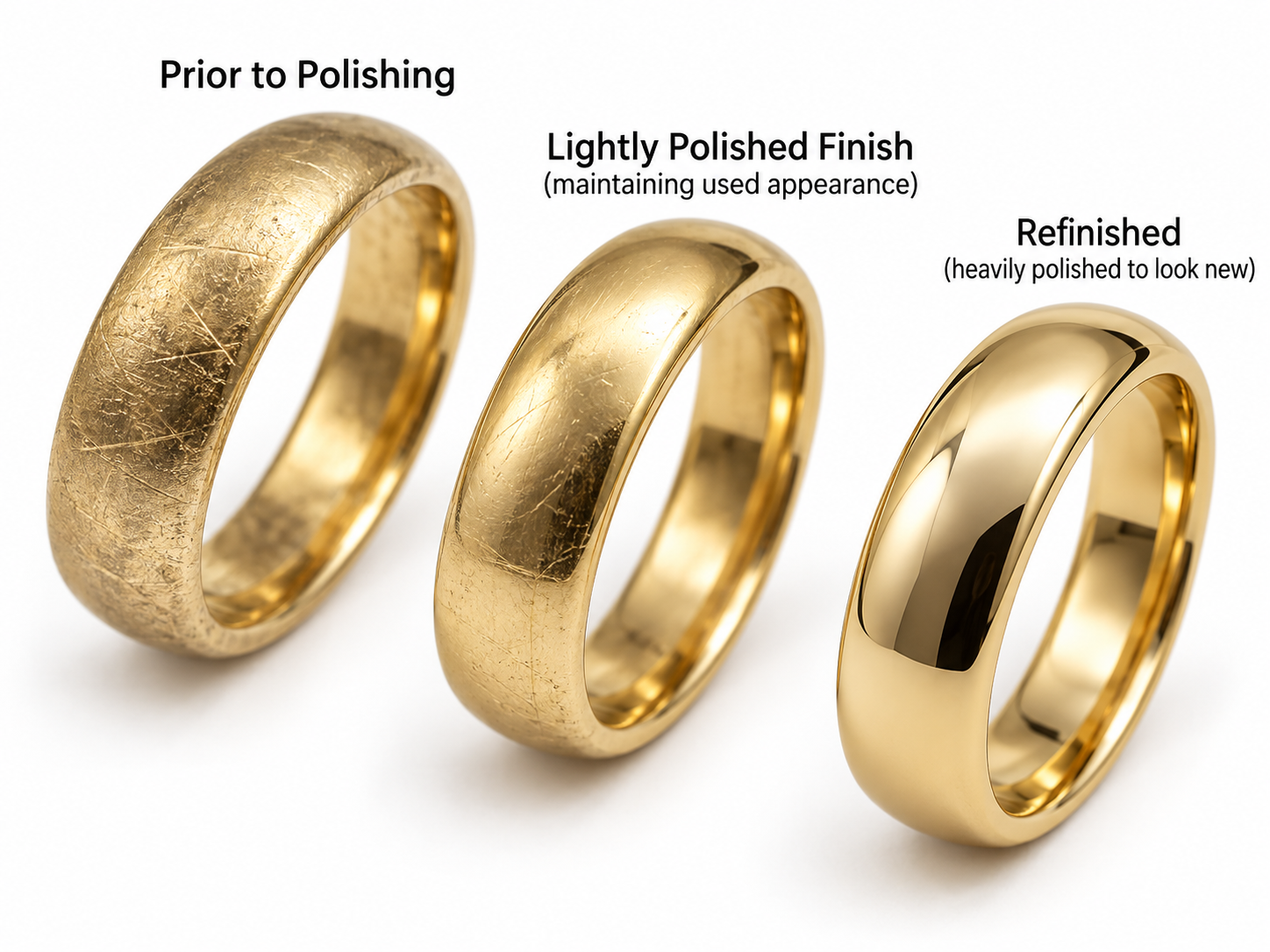
Metal that has gone through casting, soldering, sawing, bending, or goldsmithing does not look the way we are used to seeing jewelry in a display window. Tool marks, scratches, roughness, solder marks, and various irregularities can remain on its surface.
The surface of metal can be worked in many different ways. It can be brought to an almost mirror-like shine, but it can also be given a matte, satin, brushed, textured, or hammered finish. Finishing, therefore, does not necessarily mean “making the jewelry shiny.” It is essentially the way we choose the surface of the metal to look and feel at the end of the process.
In this sense, the surface itself is an inseparable part of the jewelry's design.
Long Before the Polishing
One of the common mistakes is to think that the final shine is created simply with a polishing wheel and compound. In reality, high-quality polishing begins long before the jewelry ever meets the polishing wheel.
First, the metal surface must be brought to the proper condition: casting and tool marks must be removed, irregularities corrected, surfaces leveled, and scratches eliminated. From there, the work gradually progresses to finer and finer abrasives.
One of the most basic tools in this process is abrasive paper. Abrasive papers come in different levels of coarseness, measured in Grit. As the grit number increases, the abrasive particles generally become finer and the scratches they leave behind become smaller.
The idea is simple: each stage removes the marks left by the stage before it, until the metal surface is ready to receive its final polishing and shine.
There is no real shortcut to this process. Trying to remove a deep scratch using polishing alone may remove too much metal around it, distort the surface, and soften details and lines that were meant to remain sharp.
Finishing as a Key to Luxury Jewelry
This is perhaps one of the most significant differences between an average commercial piece of jewelry and a luxury piece that has been made with great care.
A piece of jewelry can be made of gold, carry expensive diamonds, and be beautifully designed, and still look mediocre if the finishing is not of a high standard.
In high-quality jewelry, it is not enough for the metal simply to be “shiny.” The surfaces should be straight and clean, the curves continuous, the connections between different parts precise, and the lines of the design should be preserved.
Even the areas that do not immediately catch the eye are important: the inside of a ring, the back of a pendant, the area beneath a stone, or places that are difficult to reach with tools.
It is often in these areas that you can see just how much time and attention were truly invested in the piece.
The Art of Polishing
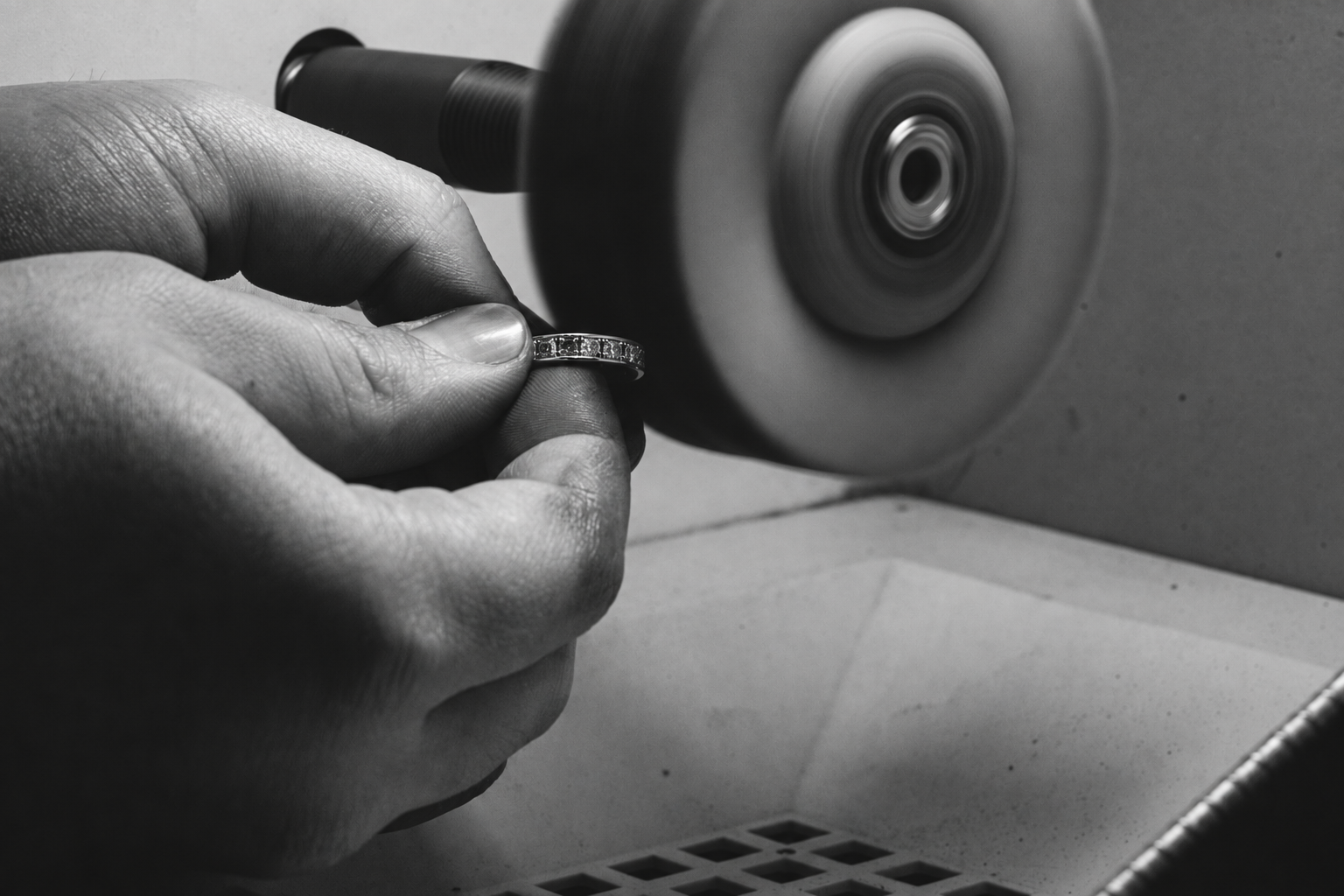
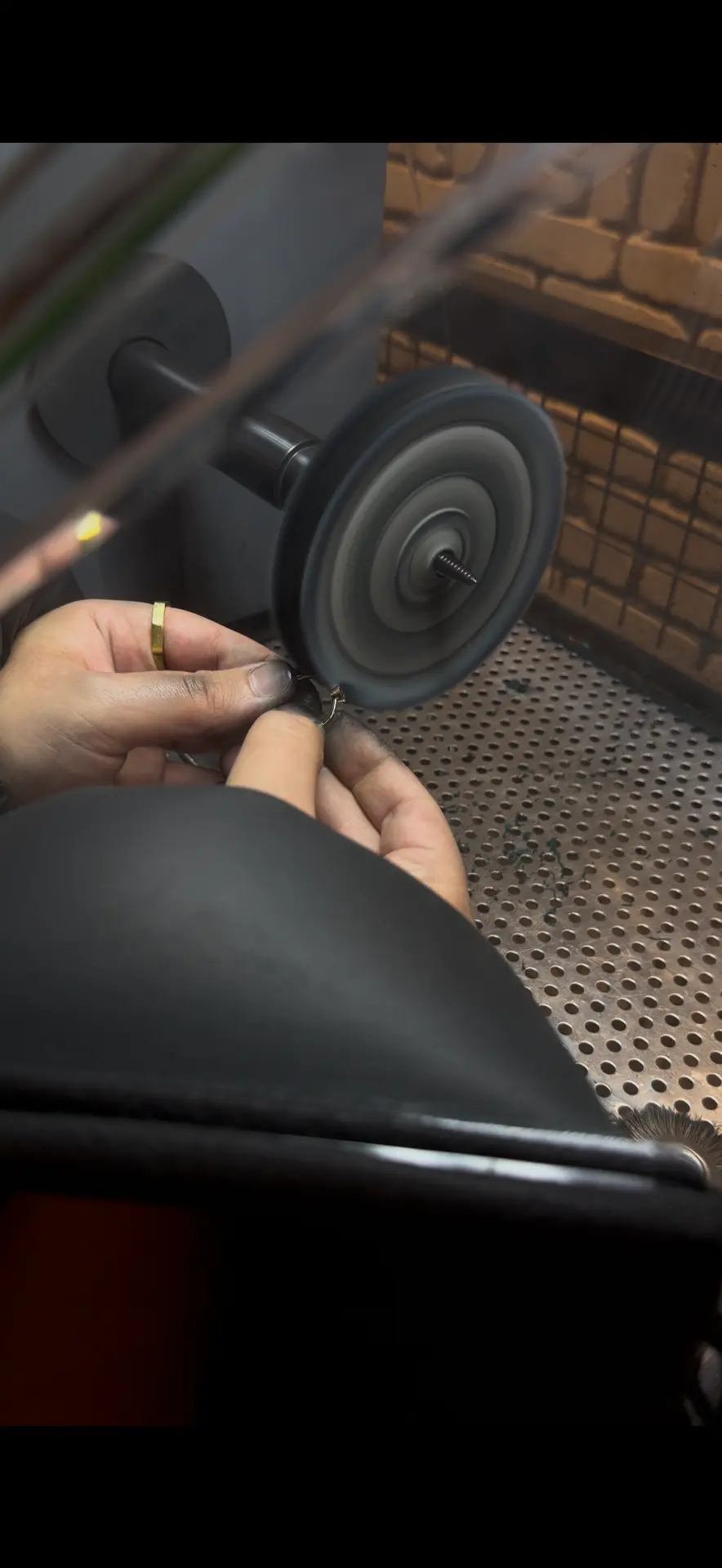
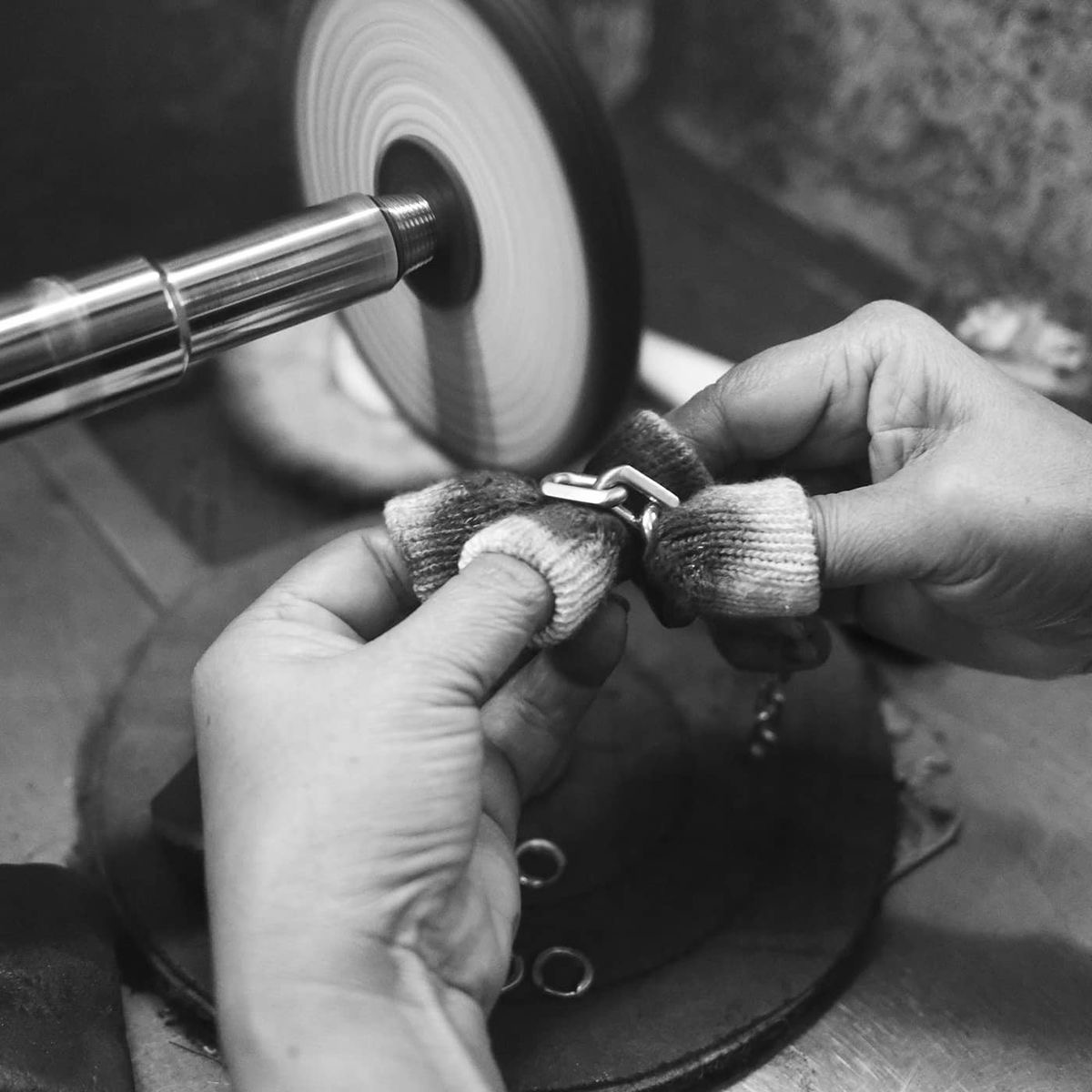
At first glance, polishing may seem like a simple operation: a spinning wheel, a little compound, and the jewelry begins to shine. In reality, it is an entire professional world of its own.
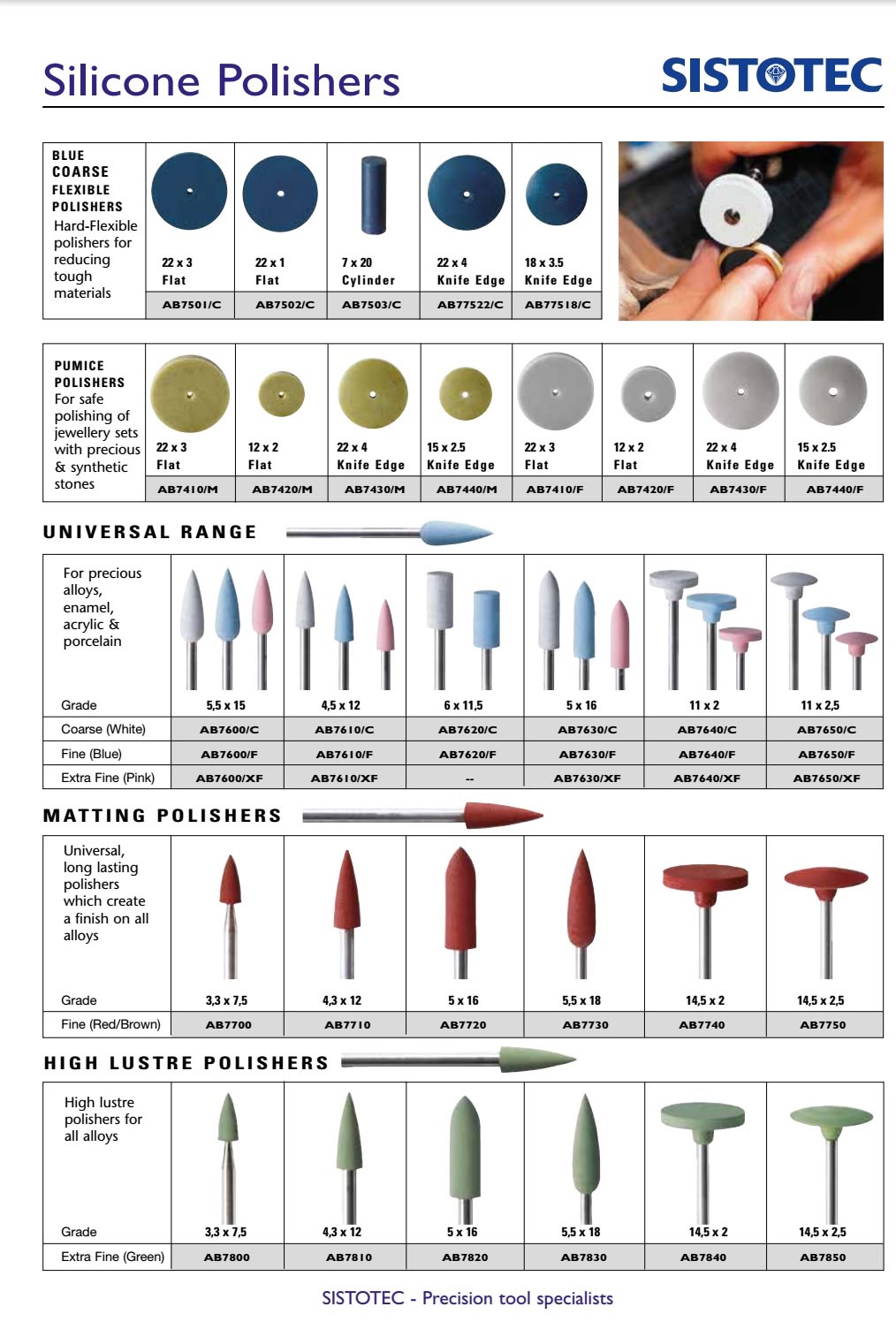
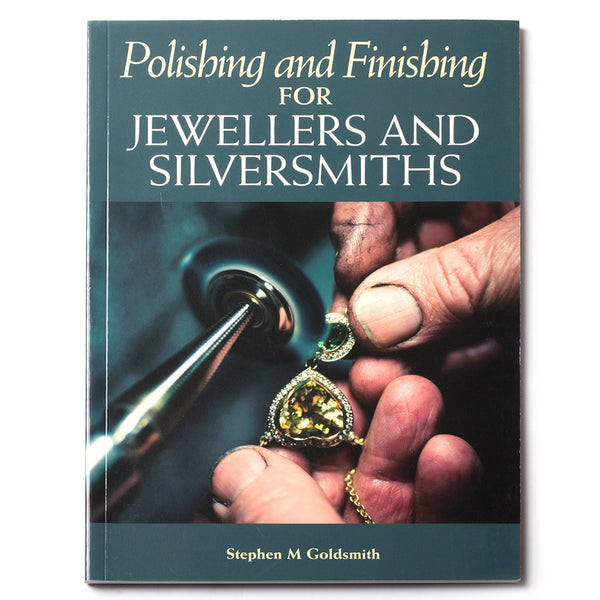
There are professionals who specialize in polishing, entire books have been written on the subject, and there are dozens of different types of wheels, brushes, discs, and abrasive materials, each with its own behavior and purpose.
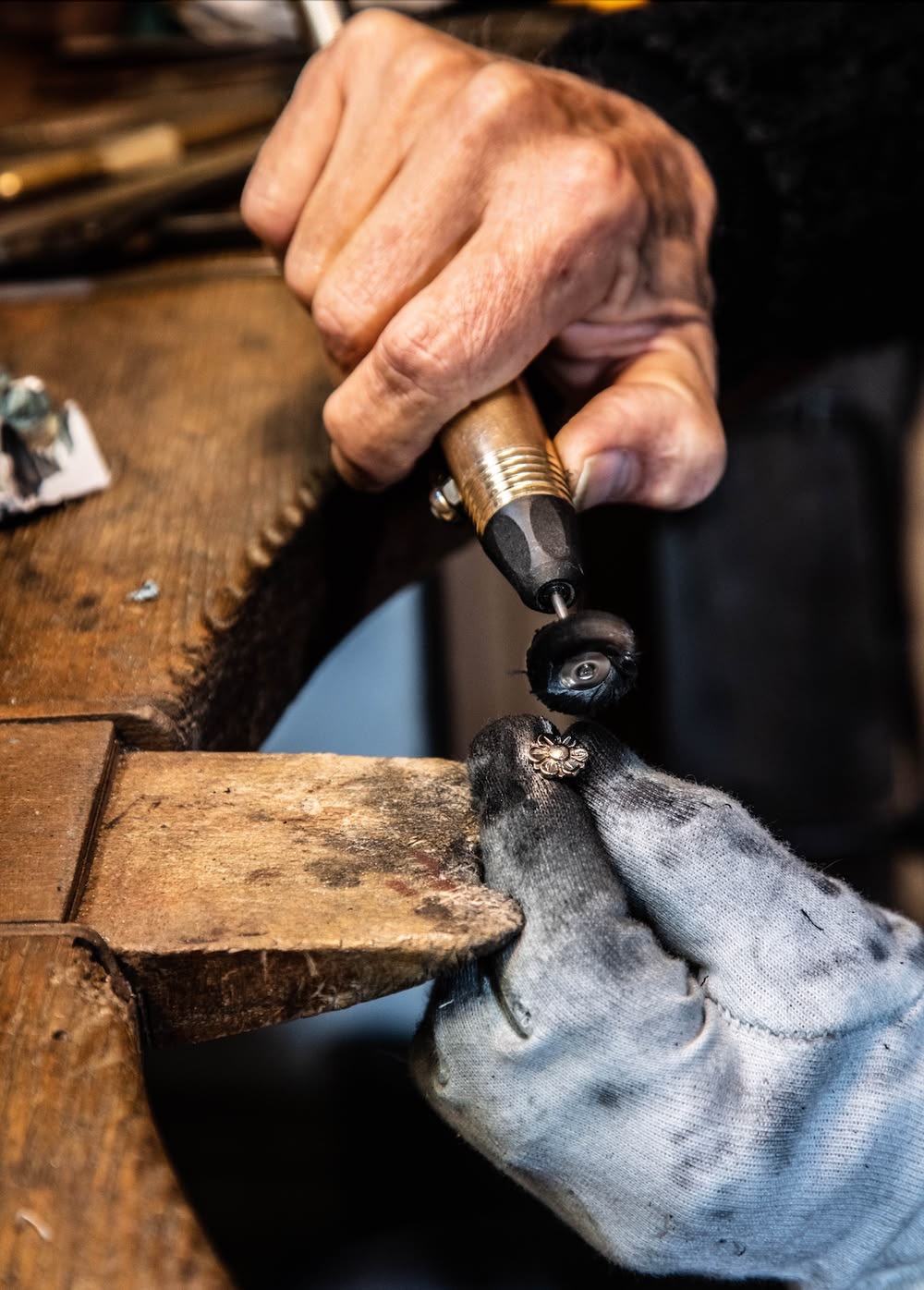
Cotton wheels, felt wheels, brushes, and small tools mounted on motors and micromotors make it possible to reach different areas and work at different levels of aggressiveness and delicacy.
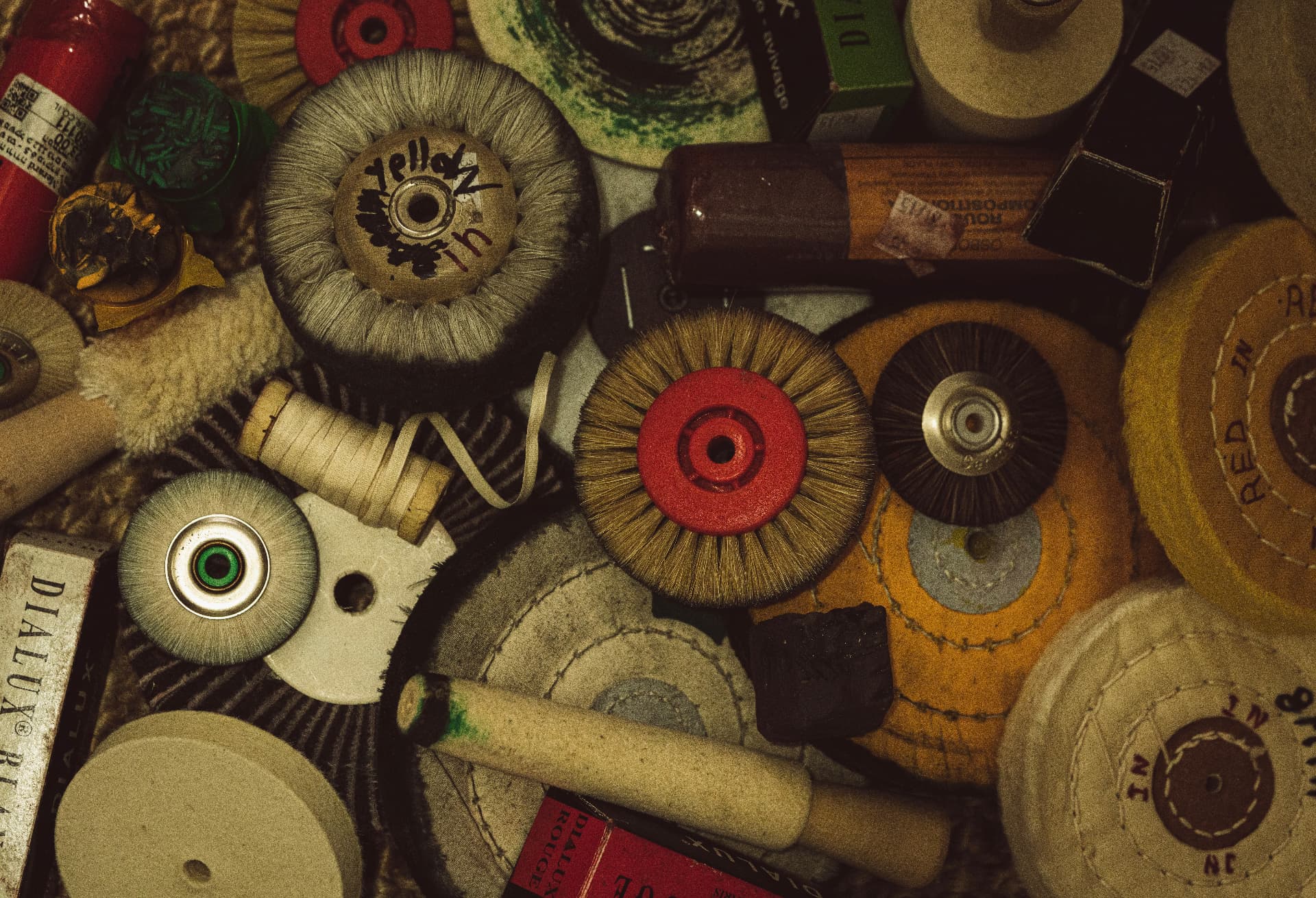
The polishing compounds themselves are also much more than simply “a paste that makes metal shine.”
They contain tiny abrasive particles within a carrier or binding material. During polishing, these particles actually perform microscopic cutting and polishing of the metal surface. Some compounds are intended for removing marks and for the initial stages of work, while others are designed for finer stages and for producing the final shine.
Interestingly, for many years animal fats were used as carriers in traditional polishing compounds. The fat holds the abrasive material and allows it to be transferred onto the polishing wheel and from there onto the surface of the metal. Today, compounds based on synthetic and modern carrier materials also exist, but the principle remains similar, tiny abrasive particles held within a binding material.
And this world reaches extremely high levels of precision. Alongside familiar polishing compounds, there are also diamond polishing compounds, in which the abrasive material consists of extremely small diamond particles. They are produced in different grades and microscopic particle sizes and are used for particularly precise polishing work. High-quality diamond compounds can be significantly more expensive than ordinary polishing materials and are used in a variety of applications where a very high level of polishing is required.
Other abrasive materials include compounds based, among other things, on various metal oxides. Traditional compounds such as Tripoli and Rouge also exist, alongside a wide range of modern polishing compounds.
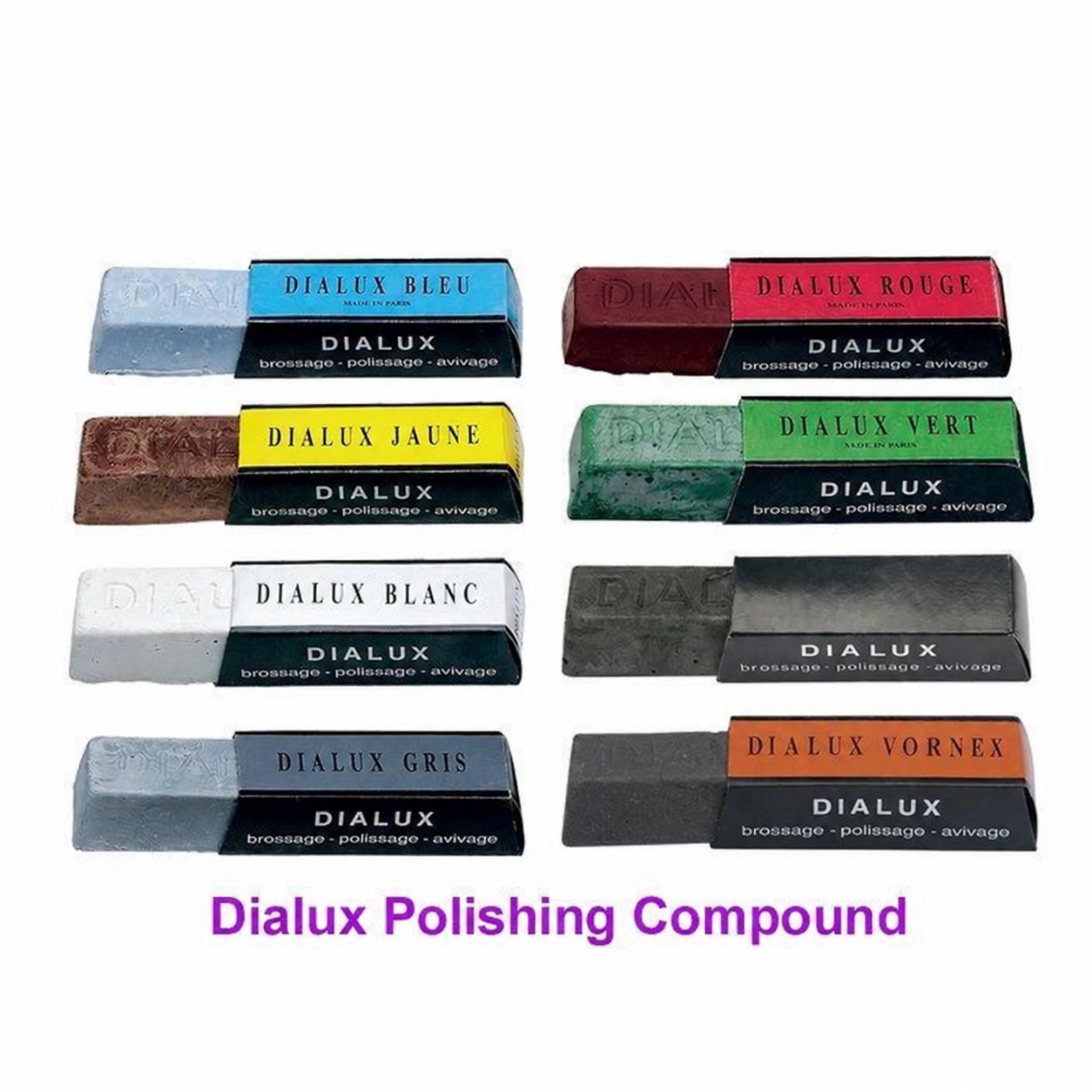
The type of metal also changes the nature of the work. Yellow gold, white gold, platinum, and silver do not behave in exactly the same way, so the choice of tools, compounds, and working stages is made according to the metal, the structure of the jewelry, and the desired result.
Polishing Without Erasing
Perhaps this is where the true skill of polishing lies.
A polishing wheel does not only make the metal shine, it also removes material from it. If the work is too aggressive, it can round an edge that was meant to remain sharp, soften an engraving, erase a delicate detail, alter the shape of prongs holding a stone, and even affect the proportions of the jewelry.
The goal of good polishing, therefore, is not to make every part of the jewelry as rounded and shiny as possible.
Quite the opposite.
High-quality polishing should respect the work of the goldsmith and the stone setter and preserve the geometry of the jewelry. A flat surface should remain flat, a sharp edge should remain sharp, and a curve should remain exactly the curve that was originally intended.
Perfect polishing does not change the jewelry. It removes the marks of the work and leaves behind only the result.
The Details the Eye Can Feel
Most people looking at a piece of jewelry will not analyze its surfaces professionally. They will not necessarily notice consciously that a certain line has remained sharp, that a particular surface is perfectly flat, or that the polishing has been completed perfectly even in a small corner that is difficult to reach.
But the eye takes in the overall result.
This is one of the reasons why a piece of jewelry that has been made and finished to a high standard can feel completely different from a commercial piece, even when at first glance their designs may seem similar.
Behind that shine there are sometimes hours of sanding, refining, correcting, and polishing, processes repeated again and again until the surfaces and shine that characterize a piece of jewelry finished to a high standard are achieved.